Material Change of Use in Queensland: A Complete Legal Guide for Property Owners, Investors and Developers


Learn what a Material Change of Use (MCU) is in Queensland, when planning approval is required, common legal pitfalls, and how a property solicitor can help. A comprehensive guide from Mint Legal Brisbane.
Material Change of Use in Queensland: Everything You Need to Know
Whether you are converting a house into a childcare centre, transforming a warehouse into a gym, or opening a café in a commercial tenancy, one legal question often arises before work begins:
Does this require a Material Change of Use (MCU)?
Many Queensland property owners assume that owning land gives them unrestricted freedom to use it as they wish. In reality, land use is heavily regulated under Queensland's planning framework. Using land for a purpose that is inconsistent with the planning scheme may require development approval before the new use can lawfully commence.
Failing to obtain the necessary approval can lead to enforcement action, significant financial loss, delays to your project, and difficulties when selling or refinancing the property.
At Mint Legal, we regularly assist buyers, sellers, investors, developers and business owners in understanding how planning laws affect property transactions and commercial development. While town planners prepare planning applications, a solicitor plays a crucial role in identifying legal risks, reviewing contracts, advising on planning conditions and protecting clients throughout the transaction.
This guide explains what a Material Change of Use is, when approval may be required, and how obtaining legal advice early can save considerable time and expense.
What Is a Material Change of Use?
In Queensland, a Material Change of Use (MCU) generally refers to starting a new use of land, re-establishing a previously abandoned use, or significantly changing the intensity or scale of an existing lawful use.
The concept forms part of Queensland's development assessment framework established under the Planning Act 2016 (Qld).
Simply put, if the purpose for which land is being used changes in a meaningful way, planning approval may be required.
Examples include:
- converting a residential dwelling into medical consulting rooms;
- changing an office into a childcare centre;
- opening a restaurant where retail premises previously operated;
- converting industrial premises into self-storage facilities;
- establishing short-term accommodation where permanent residential use previously existed.
Whether approval is required depends on numerous factors, including the property's zoning, overlays, local planning scheme, and the proposed use.

Why Does Material Change of Use Matter?
Planning schemes are designed to ensure that development occurs in an orderly manner while balancing economic growth, environmental protection and community expectations.
Different land uses create different impacts.
For example:
- increased traffic;
- additional parking demand;
- noise;
- waste management;
- operating hours;
- environmental impacts;
- infrastructure requirements.
A residential neighbourhood generally has very different planning objectives from an industrial estate or commercial precinct.
The planning system therefore regulates not only buildings but also how land is used.
The Queensland Planning Framework
Queensland operates under a structured planning system consisting of several layers.
These include:
- the Planning Act 2016 (Qld);
- the Planning Regulation 2017 (Qld);
- local government planning schemes;
- state planning instruments;
- development assessment rules.
Each local council adopts its own planning scheme, meaning the requirements in Brisbane may differ from those in Logan, Ipswich, Moreton Bay or the Gold Coast.
Accordingly, a proposal that is accepted development in one local government area may require assessment elsewhere.
Understanding these differences before purchasing or leasing property can avoid costly surprises.

When Is Development Approval Required?
Not every change in land use requires development approval.
Some changes are classified as accepted development and can proceed without formal assessment.
Others require code assessment or impact assessment.
Determining which category applies depends on:
- the proposed land use;
- zoning;
- neighbourhood plan;
- overlays;
- state planning requirements;
- previous approvals affecting the property.
Because each property has its own planning history, professional advice should always be obtained before committing to a development or business purchase.
Common Examples of Material Change of Use
Although every proposal is assessed individually, common examples include:
Converting a House into Professional Offices
Many older residential properties are converted into:
- legal offices;
- accounting firms;
- medical practices;
- consulting rooms.
Depending on the planning scheme, this may require development approval.

Opening a Café
A retail tenancy previously operating as a clothing store may not automatically be suitable for a café.
Food preparation, customer seating, waste disposal and extended trading hours often create different planning impacts.
Childcare Centres
Childcare centres commonly require detailed planning assessment because of:
- traffic;
- drop-off arrangements;
- noise;
- outdoor play areas;
- neighbourhood compatibility.
Medical Centres
Medical practices often generate substantially greater vehicle movements than residential or office uses.
Additional parking requirements frequently apply.
Gyms and Fitness Centres
Industrial buildings are frequently converted into fitness centres.
Although the building itself may require minimal alteration, the change in land use may trigger planning assessment.
Short-Term Accommodation
Using residential premises for short-term visitor accommodation may constitute a material change of use depending on the planning scheme and circumstances.
Property owners should never assume that holiday letting is automatically permitted.

What Is NOT a Material Change of Use?
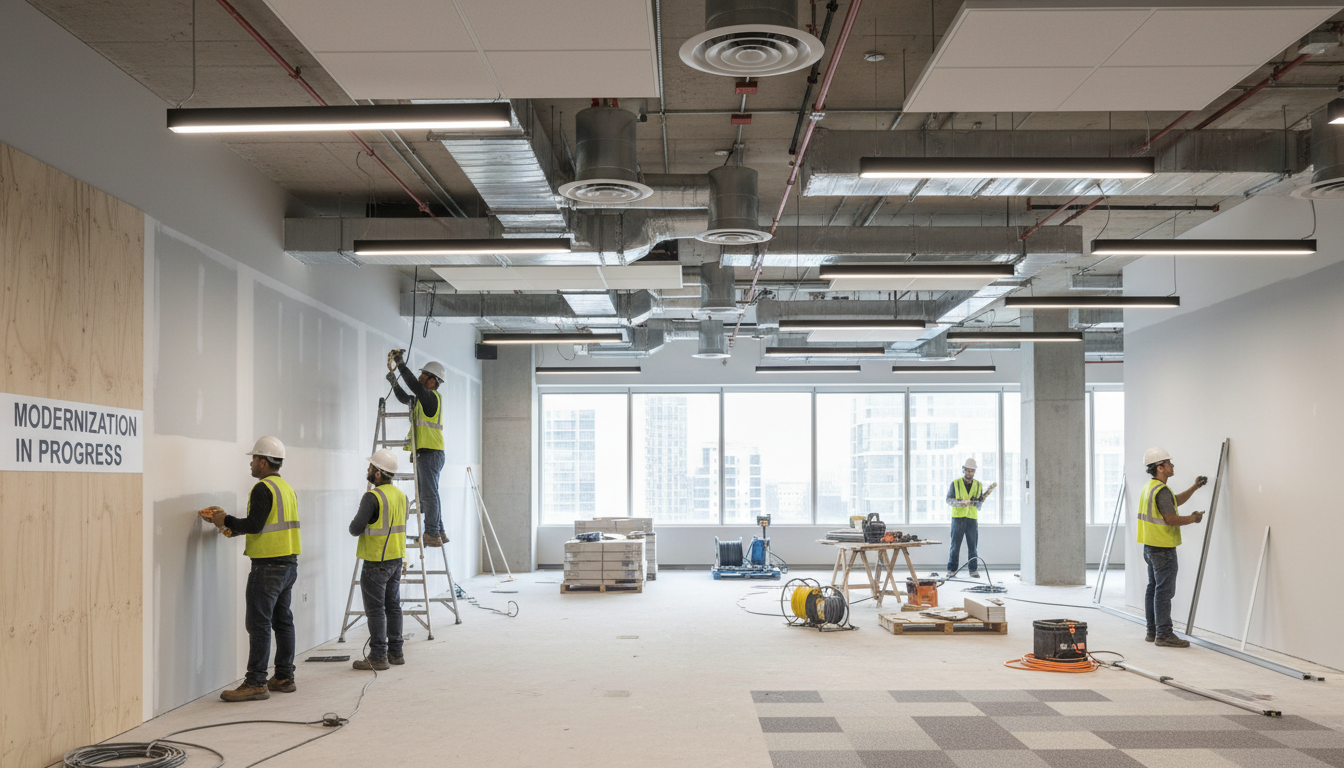
Many owners are surprised to learn that renovations alone are not necessarily a Material Change of Use.
For example:
- repainting a building;
- replacing flooring;
- upgrading kitchens;
- modernising offices;
- internal fit-outs.
These works may require building approval but do not necessarily change the legal use of the land.
Likewise, replacing one retail shop with another similar retail business may not always constitute an MCU, although each proposal must be assessed on its own facts.
The distinction between building work and land use is an important legal consideration.

Why Buyers Should Check Planning Before Purchasing
One of the most common mistakes made by commercial property buyers is assuming that the current use of a property is lawful.
In some cases:
- approvals have lapsed;
- previous owners exceeded approval conditions;
- the existing use was never lawfully established;
- additional approvals are required before expansion.
A purchaser who discovers planning issues after settlement may inherit expensive compliance problems.
For this reason, planning due diligence should form part of any commercial property acquisition.
A solicitor can work alongside planning consultants to identify legal risks before contracts become unconditional.